Loading...
Serving Yuma, AZ and surrounding areas. (928) 291-0648
Caliche soil, sustained wind, and 110-degree summers make Yuma one of the toughest places in the country to build a lasting farm fence. We know this ground, and we build to it - from post depth to corner bracing.
Farm and ranch fencing in Yuma covers perimeter fencing to keep livestock in, cross-fencing to divide pastures, and boundary fencing to mark property lines. Most projects run one to three days for smaller properties and longer for larger ranches or difficult terrain. The right fence type depends entirely on your animals, your land, and what Yuma's caliche and desert wind will put that fence through over time.
Yuma County is one of the most agriculturally productive regions in the country, and many properties on the city's edge sit adjacent to or within active farming areas. That context matters when you are designing a fence line - irrigation ditches, access roads, and the movement of farm equipment along property lines all need to be accounted for. We walk your property before we quote, not after.
If you are managing a mix of livestock types and need different containment for different animals, ask about our pet and dog fencing options, which can be combined with larger agricultural runs on the same property.
Walk your fence line and look for posts that are no longer standing straight. In Yuma's caliche-heavy soil, posts that were not set deep enough or were not properly anchored can shift over years of wind pressure and temperature swings. A leaning post puts stress on the entire fence run and the problem will get worse without attention.
Loose wire, snapped strands, or gaps wide enough for an animal to push through mean your fence is no longer doing its job. Sagging wire often signals failed corner bracing. In Yuma's windy conditions, wire that was once tight can loosen faster than you would expect, particularly after a series of spring dust storms.
If your livestock are getting out, or if wildlife or stray animals are finding their way in, there is a functional failure somewhere on the fence line. Sometimes the breach is obvious - a downed section or a gate that will not latch. Other times it is a subtle gap at ground level that a small animal can squeeze through.
If you are adding a new type of livestock - switching from cattle to goats, adding horses, or expanding your operation - your existing fence may not be the right fit anymore. Different animals need different wire spacing, height, and visibility. A fence that worked fine for one purpose can fail completely for another.
We build three types of agricultural fencing across the Yuma region. Barbed wire is the most cost-effective option for cattle operations - it covers large runs quickly, holds tension well when braced correctly, and holds up to Yuma's UV exposure with galvanized wire and steel posts. Woven wire, sometimes called field fence or livestock wire, is the better choice for smaller animals like goats or sheep that can slip through wider gaps. If you are keeping dogs or pets alongside livestock, we can coordinate containment fencing for both in the same project.
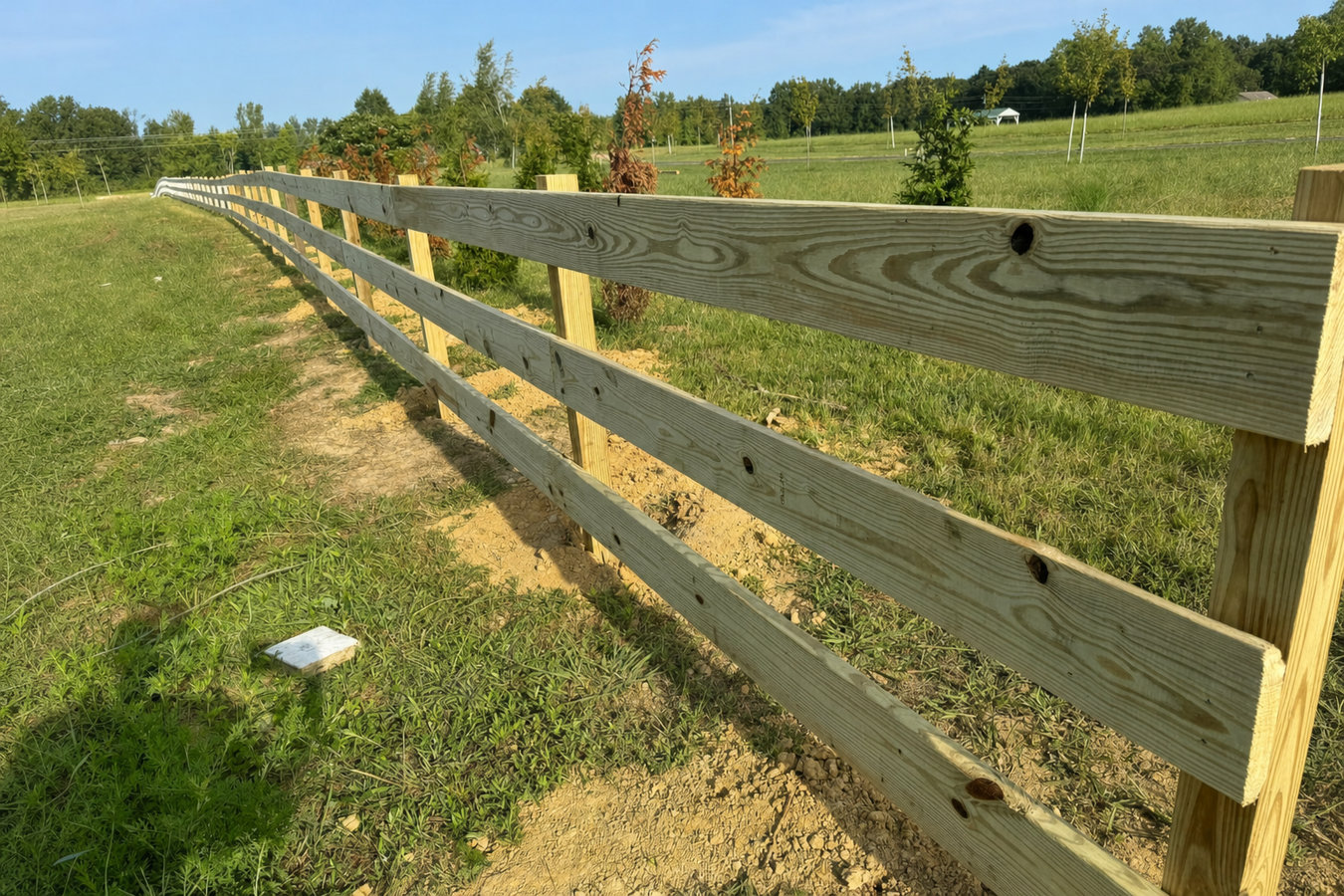
Wood post-and-rail fencing is popular for horses because it is highly visible and reduces the risk of wire injury. We also install chain link fencing for property owners who need a durable, low-maintenance perimeter around outbuildings, equipment storage, or a mix of agricultural and residential uses. Every installation starts with a full property walk, a soil assessment, and a written estimate that covers materials, labor, gate hardware, and permit costs where applicable.
Best for cattle operations and large perimeter runs where cost per foot and speed of installation are the top priorities.
Best for smaller livestock - goats, sheep, pigs - that need tighter wire spacing to prevent them from squeezing through or getting tangled.
Best for horse properties where visibility matters and owners want a fence that reduces the risk of wire-related injuries.
Yuma County is one of the most productive agricultural counties in the country, and the land use here creates fencing challenges that contractors from out of the area simply are not prepared for. Irrigation ditches run through or alongside many rural properties, access roads cut across fence lines, and the soil shifts differently depending on how close you are to agricultural land with irrigation history. We design fence lines that work with those realities - not against them. Homeowners in Wellton and similar communities along the I-8 corridor have called on us for exactly this kind of agricultural fencing work, where soil conditions and wind exposure are at their most demanding.
The wind corridor through the Yuma area produces frequent dust storms and sustained high winds, especially in spring. Those conditions put constant lateral pressure on fence posts and loosen wire tension over time. A contractor who knows this area builds with closer post spacing and heavier corner bracing than would be standard in a calmer climate - and that difference shows in how long the fence holds up between service calls. Properties further out toward Dateland face the same wind and caliche conditions, and we have worked in those areas as well.
We reply within one business day. We ask basic questions first - how many acres you are fencing, what animals you are keeping, and whether you have an existing fence to remove. This keeps the site visit focused rather than starting from scratch when we arrive.
We walk your fence line with you, check the soil, note obstacles like irrigation ditches or rocky patches, and discuss fence type and gate placement. You receive a written, itemized estimate - materials, labor, gate hardware, and permit costs if applicable. No single-number guesses.
We confirm whether a permit is needed for your property and location, and we handle the application if it is. You may need to locate your property lines before installation starts - we will tell you if a survey is advisable based on what we see at the site visit.
The crew sets corner and end posts first - they anchor the whole fence - then works along the line. Once posts are set and wire is run, we install gates, tension the wire, and walk the finished fence with you so you can point out anything that needs adjustment before we leave.
Free on-site assessment. We walk your property, assess the soil, and give you an itemized quote - no surprises when the bill comes.
(928) 291-0648We assess soil conditions before we quote your project, so caliche is factored into the price from the start - not added as a surprise line item once the crew hits hard ground. The number you agree to is the number you pay.
Yuma's wind corridor puts real lateral pressure on fence lines. We use closer post spacing and heavier corner bracing than would be standard in a calmer climate, because a fence that starts sagging after the first spring winds is not a fence - it is a liability. The University of Arizona Cooperative Extension - Yuma County provides regional guidance on agricultural fence construction that informs how we approach these conditions.
A fence that was fine for cattle may be completely wrong for goats. We ask about your animals before we recommend a fence type, because the right match means your livestock stay where they belong from the first day - and you are not calling us back for emergency repairs within a season.
Properties on Yuma's agricultural fringe often have irrigation easements, access roads, and neighboring farm operations to account for. Contractors who have not worked in this area regularly design fence lines that create new problems. We have worked across the Yuma region long enough to know what those complications look like before we hit them.
Farm fence work in this area rewards experience - not just with construction technique, but with the specific soil, wind, and land-use conditions that shape every project. That local knowledge is what keeps our agricultural clients coming back when their property or their operation changes.
Dedicated dog-safe fencing systems sized and gapped to keep pets securely in the yard, installable as a standalone run or combined with agricultural perimeters.
Learn MoreGalvanized chain link fencing for outbuildings, equipment yards, and mixed agricultural-residential properties across the Yuma area.
Learn MoreCall us today or request a free estimate online - we reply within one business day and schedule site visits fast across the Yuma area.